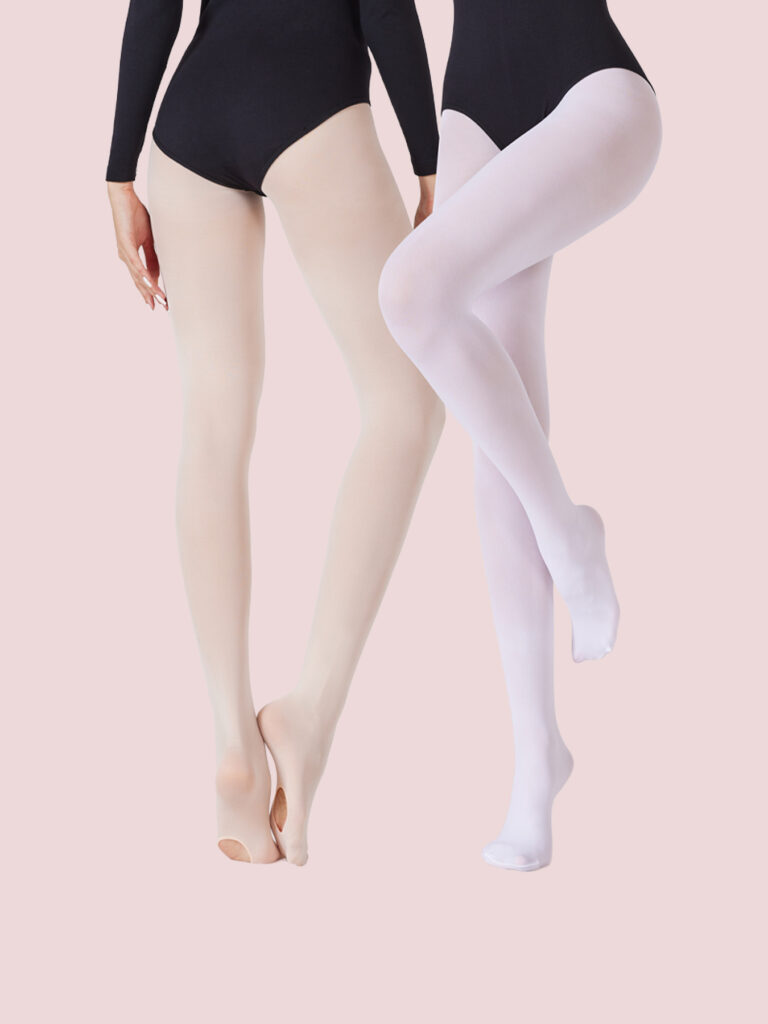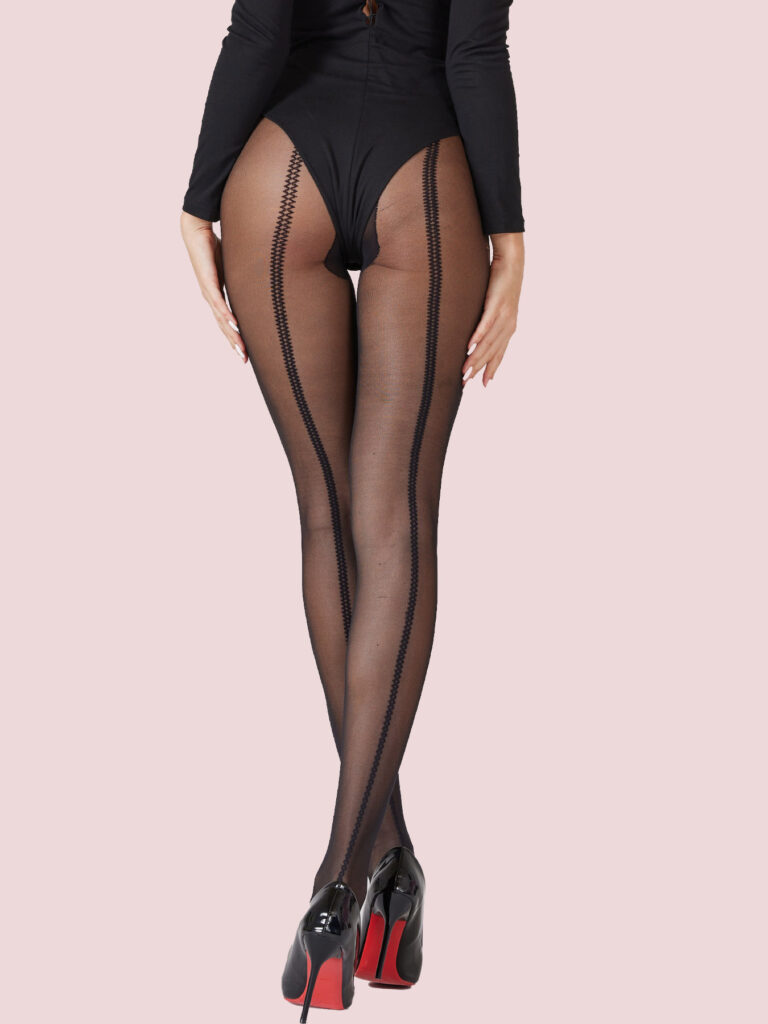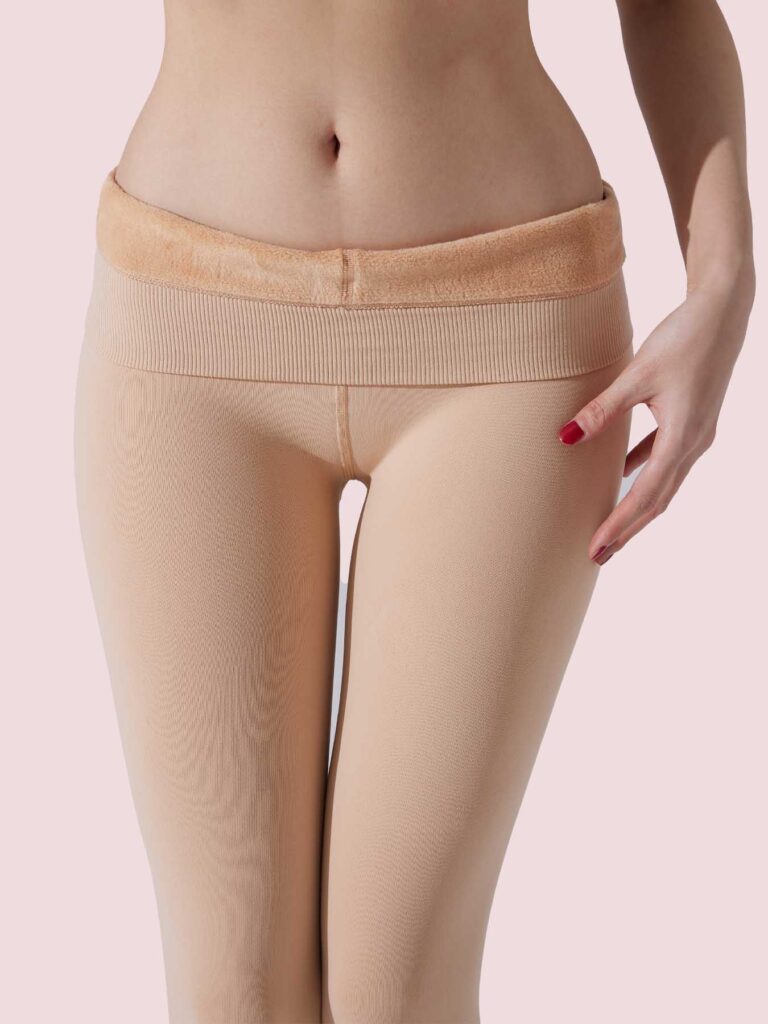
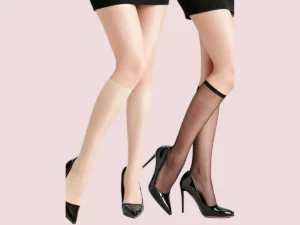
A sheer knee-high stocking does not have a waistband, so the top of the stocking has to stay on the calf as it rises. The welt has to be comfortable, but not roll down when the wearer walks, sits or bends the knee. If it rolls down, it has to be readjusted. If it grips too hard, a line of tight material can be felt.
A useful sample review for retailers buying sheer knee-high socks separates two questions: does the stocking stay up where intended, and can the wearer tolerate the welt height and tension? Request a free Laseta sample pack to compare available welt constructions, and share the target calf range and wearing position so the samples can be reviewed against your buyers’ needs.
Why Do Sheer Knee-High Socks Slip or Dig Into the Calf?
The leg of a calf is not a cylinder. The circumference of the leg at different points varies, so a welt that feels to be of correct tension when the calf is in one particular position will be too loose or too tight a few cm higher up or lower down. In addition, individual humans with similar shoe sizes have different shaped calves. This means that the intended wearing position of the product must also be specified as part of the product specification.
How does calf shape affect the top edge?
The welt needs to have sufficient tension to hold up against gravity, but fit around the calf at its widest point. A narrow band would sit in a band of skin to concentrate contact, while a wider band would spread contact over more fabric but fit no better than a narrow one. The knit, yarn elasticity, and relaxed circumference of the band all come into play here.
Why is stretch different from holding power?
Stretch is the material’s ability to extend. Recovery is the material’s ability to go back to its original form after having been extended. So a stocking can be easy to put on at first but have some retention problem after repeated wear. The knitted structure of the loops, the yarn’s elasticity and the dimensions of the item all interact. So for a private label knee-high socks program define the fit range and check the recovery of the samples rather than believing that a high-elastane label will give you a good welt. A supplier developing sheer knee-high stockings should compare the relaxed opening of the stocking with its worn dimensions.
Not sure how a welt will behave on a real calf?
A spec sheet cannot show you how a band performs over a full day of walking, sitting, and bending. Request a free Laseta sample pack, wear each welt construction side by side, and judge holding power and comfort yourself — before committing to any specification.
Avoid misrepresenting your everyday support hosiery as medical compression. Do not make claims regarding compression or circulation unless the product has been specified with the appropriate compression rating and supporting evidence. Instead, describe the real product and supporting fit information.
Request a free Laseta sample pack to compare welt constructions. Share the target calf range and desired wearing position, then measure each relaxed band and test it on representative wearers. A soft hand alone does not confirm holding power or comfort during movement.
How Can You Evaluate the Top Welt Without Guessing?
The hand stretch test is often used to compare samples but does not simulate a day of wear. Therefore test your finished knee-highs on people with calf measurements within the intended customer group. Mark the starting position of the welt and test whether it moves, rolls or even twists during normal activity of walking etc.
What should a practical wear test record?
Have each wearer walk, sit, stand and bend knees over a set time period. Go through the same tests with the free samples and measure slippage separately from any pressure or skin impression. A welt can feel too tight whilst staying in place but a comfortable feeling welt can also move downwards over time. Measure the circumference of the wearer’s calf at the welt position, the product size and the height of the stocking. Compare results.
How can buyers spot rolling and twisting?
Rolled edge can make band thicker and more pressure-concentrated. Twisting welt can leave fabric unevenly distributed around calf, even when correct height is achieved. Test after wearer has moved around, not just after stocking has been put on. One can then test effect of altering band width, of changing construction and of altering stocking placement independently of altering leg length to solve problem of uneven welt recovery.
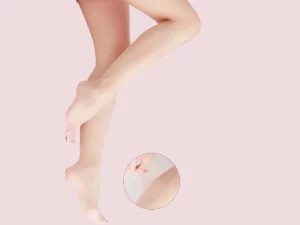
Although some styles use a wide comfort band, ‘non-slip’ must be confirmed on the intended wearers. Fit claims are only as strong as the intended calf range and wearer testing. When comparing styles of knee-high hosiery it is best to list the band width and pressure separately from the slippage.
What Does Denier Tell You About Fit?
Denier is a measure of the yarn’s linear density. It gives an indication of whether the leg of the stocking is to be sheer or more opaque but does not relate to welt comfort, recovery or to the fit around the calf. A 10D style for example may have a very fine leg section but a very different top band to the leg. These areas must be inspected separately.
How should the leg and toe be checked?
Test the leg for adequate transparency and for not pulling up too much at the ankle. A leg that is too short for the welt will pull up, and a leg that is too long will create folds when worn with shoes. Also test the toe area, as this is subject to greatest stress from shoe friction. The 10D Leg-Elegant style LD-13003 made by Laseta is made from an 85% nylon, 15% spandex blend and has a reinforced toe. Check the reinforcement in relation to the leg length and top band.
Why sample more than one leg shape?
Similar height individuals can have very different calf measurements and leg lengths. One must fit the intended range on samples of similar height individuals and check the welt, ankle, heel and toe of the sample. Compare this with the sheer knee-high Laseta product LD-13035 of similar design to the chosen style. A one-size product needs to have a practical calf measurement range that can be communicated to customers by the retailer.
How Should a Buyer Specify a Knee-High Style for Private Label?
Specify who the intended wearer is and where the welt will be positioned. List available calf range, stocking length, denier, colors and toe style. Provide a size chart rather than stating ‘one size’ and allow customers to measure up for themselves. For online sales, a close up of the welt and a photo of the full leg will also help customers to more easily judge the construction.
What should be agreed before a bulk order?
Test finished samples on typical wearers for slipping, rolling, twisting or pressure. Note any problems and use the approved samples for construction reference. Subsequent packaging and labeling should be confirmed only after size and product details have been settled and accurately applied to the garment.
Where can manufacturing support help?
Laseta manufactures knee-high hosiery and supports OEM and ODM discussions about material, size, color, labels, and packaging. Its production covers knitting, seaming, dyeing, setting, and drying, allowing the welt and leg fabric to be developed together. When you ask Laseta for a free knee-high sample pack, include the target calf range, denier, intended height, and any reference pair. Confirm which constructions are available to compare.
The same information can be returned to the manufacturer with a sample that answers the real fit question for the manufacturer. A retailer can compare the band to other knee-highs of the same type on different calves before selecting a specification for their own private label knee-high socks. The wholesale program for sheer knee-high stockings should also contain fit notes for the retailer to put in their product listing.
FAQs
Q1: Why do knee-high stockings slide down even though the band feels tight?
A1: The welt may be in the wrong place, the leg length pulling against it and the fabric not recovering as expected. This all depends on the full fit of the holding.
Q2: Are one-size sheer knee-high socks suitable for every calf?
A2: No. While Stretch can fit a range of sizes, there is still a practical fit size for the product which needs to be tested and communicated.
Q3: What should buyers check before ordering knee-high stockings in bulk?
A3: Check welt for comfort, recovery; movement-related slippage, rolling; leg length; ankle fit; toe construction; correct size information.
Request Knee-High Samples for Fit Testing
Laseta connects welt width to tension with Calf Area, Length, Denier and Toe Construction to help the private-label buyer compare among various styles and view fit on representative wearers prior to approval for bulk production.
Please supply the following information: calf measurements at the position where the welt will sit, desired fit within the width of the calf, desired stocking height and denier, toe details, intended wearer and use. We can send a free sample pack of our available knee-high styles for you to compare comfort, recovery and mobility on our standard calf measurements as well as on the boundaries. For custom welt or other construction alterations please contact Laseta to confirm the scope and terms for sample development separately.