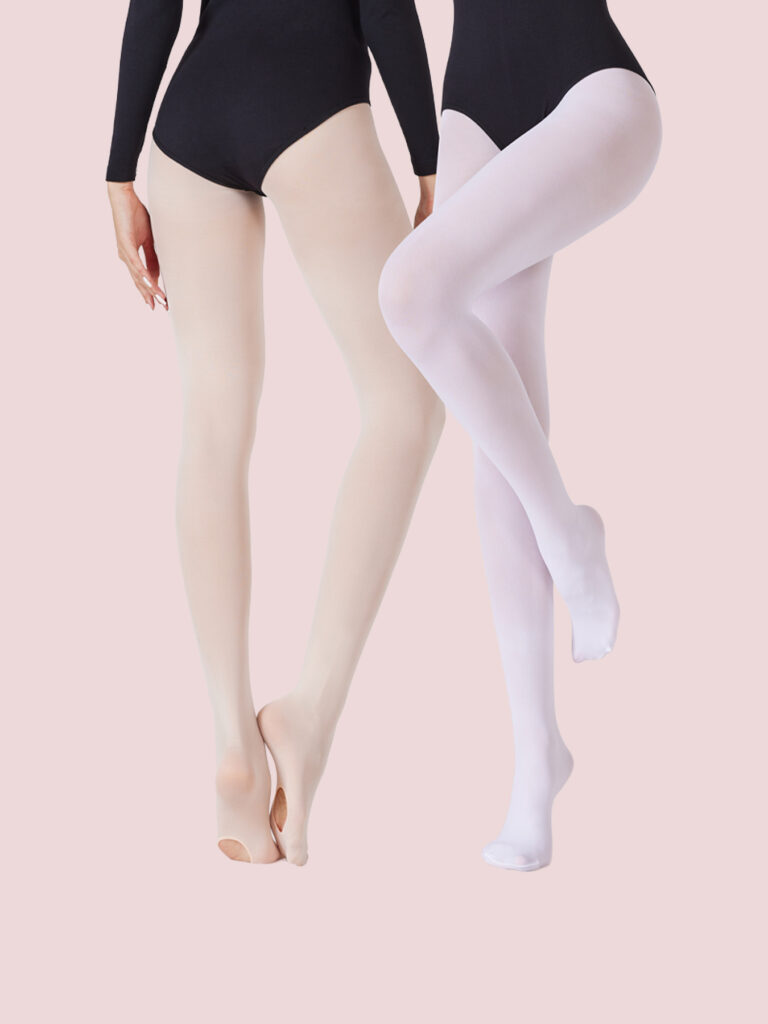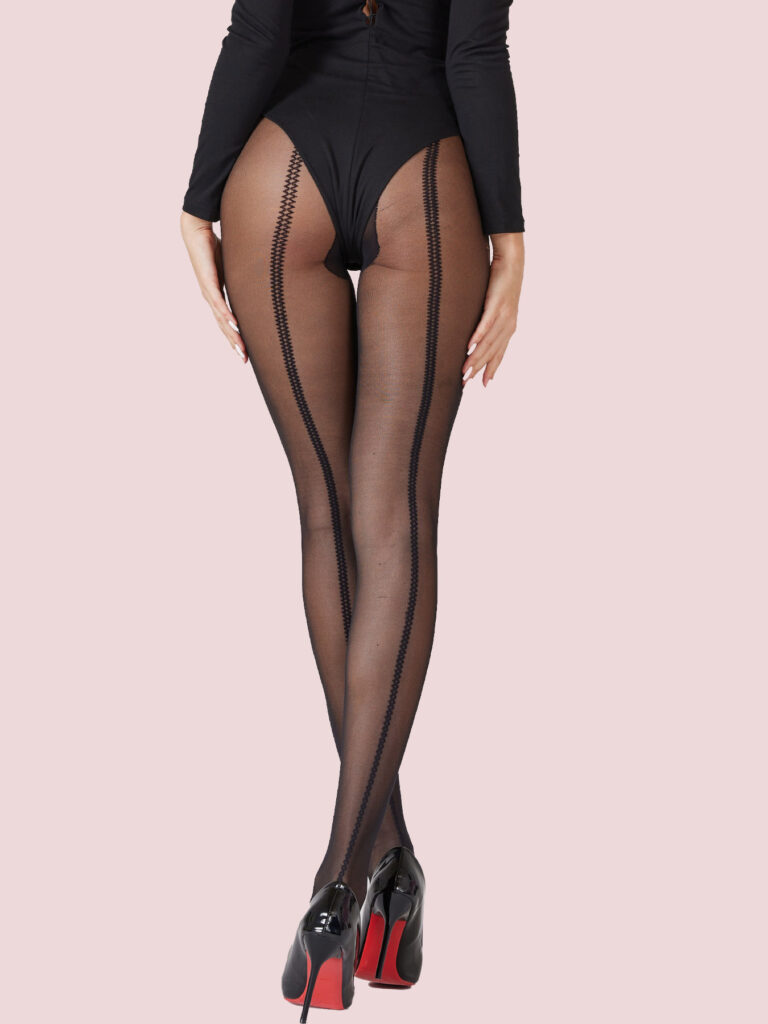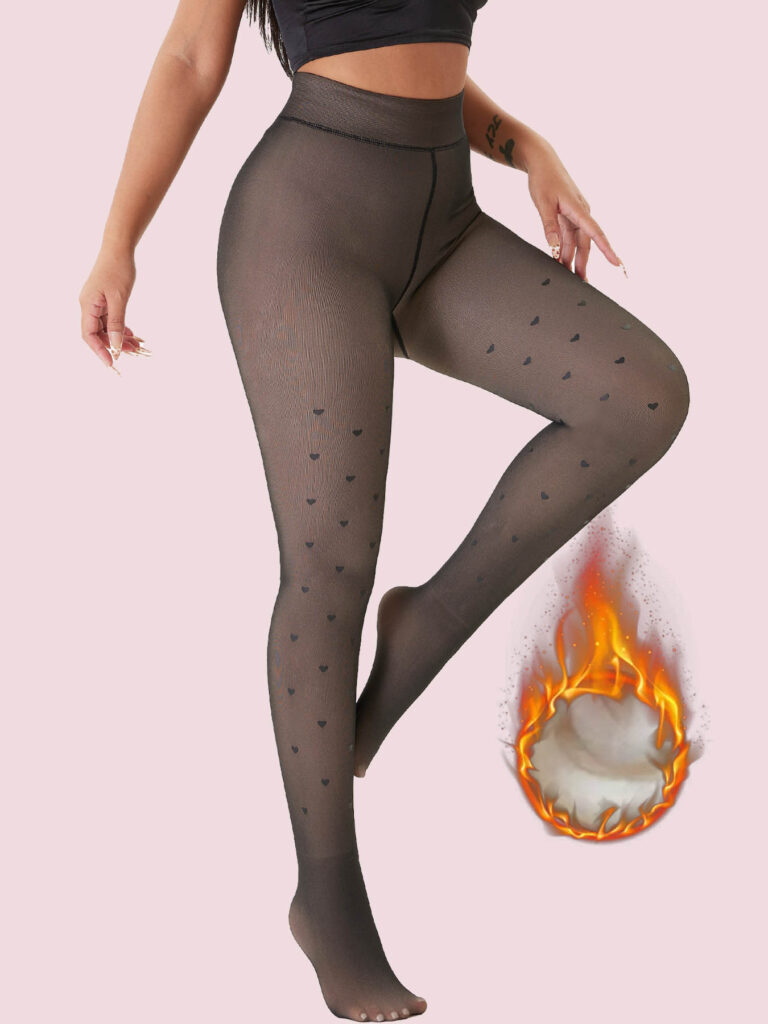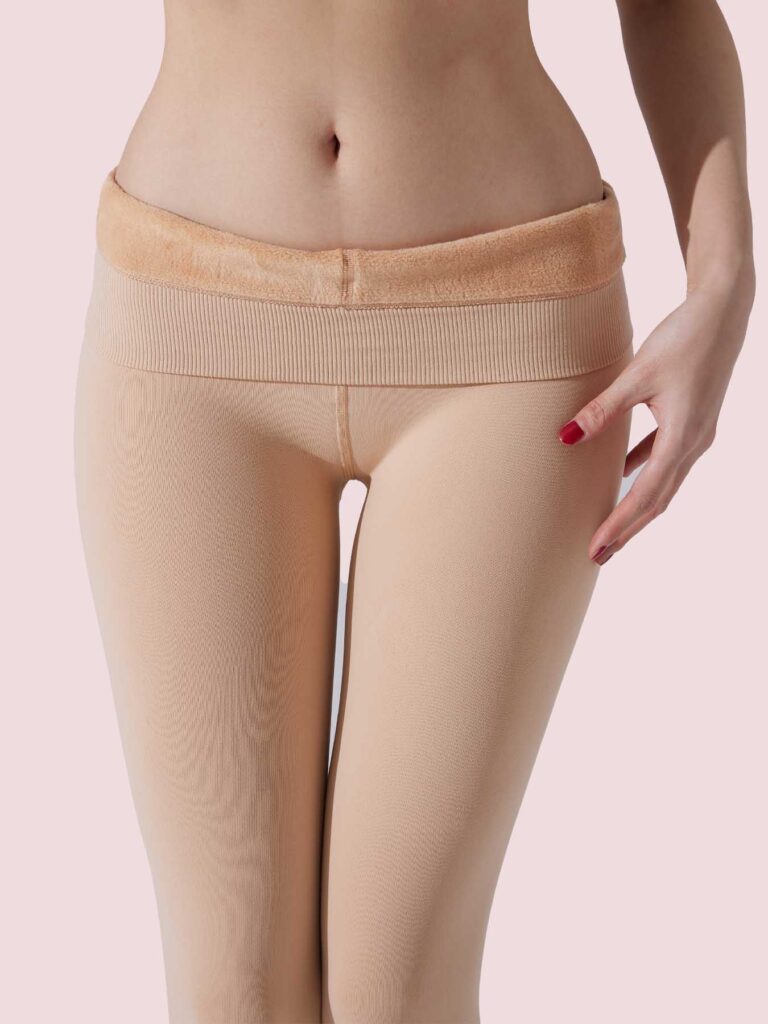

Stretch opens the knitted loops and changes the surface presented to the light. More of the background may show through as well. Glossy tights can consequently look duller when worn than when laid flat, so review them at the stretch your customers will actually put into the garment.
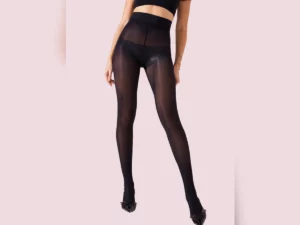
A small display leg can give a sample a bright, even highlight that looks excellent in product images. Put the same shiny pantyhose on a larger wearer and the upper thigh may look quite different. Turning up the brightness in the next photograph won’t change what that wearer receives.
For a glossy range from Laseta, first establish whether the difference comes from the garment, the fit or the photographic setup. Include a worn finish reference in the brief. ‘As shiny as the catalogue image’ leaves too much dependent on how that image was taken.
Why Should Glossy Tights Be Approved on the Body?
Light reflects differently from a flat sample and a sample wrapped around a leg. Set both candidates up in the same way before deciding that one has a better finish.
Keep the comparison conditions consistent
Keep the first comparison on one wearer or form, with the camera, light and background fixed. Then look beyond the bright strip that catches your eye. How does the finish carry up from the ankle to the thigh? What remains visible from the side? Include the calf and bent knee so the approval describes more than the best reflection.
Then assess the proposed size boundaries. The finish may change as the fabric covers a larger area. Record whether the result still meets your chosen look instead of assuming that a single “one size” sample represents every customer.
High-transparency bare-spandex styles and water-glow hosiery are among the options in Laseta’s glossy tights range. A request for ‘high shine’ could lead to more than one of them. Instead, request a focused gloss sample comparison with an unedited finish reference, colour and target sizes. That gives the team a narrower selection to work from.
Which Production Details Matter for Shiny Pantyhose?
There is little to be gained from asking for a process change before you know which sample is being discussed. Start with its yarn and construction. Once the garment is identified, the factory can review the disappointing finish against that particular item.
Identify the approved yarn and construction
Core-spun yarn, bare elastane and microfiber appear across Laseta’s hosiery range. Which one is in this sample? Keep the answer in the approval record, because a change between those constructions may bring a different feel, stretch or surface appearance with it.
Alongside the construction, record the stated denier and finish reference of the selected glossy tights. A lower quotation for another construction is a proposal to review another sample. It hasn’t inherited the original pair’s appearance approval just by being offered as an alternative.
Fabrics, sizes, colours and packaging can all be discussed through Laseta’s OEM/ODM development service, for plain and jacquard hosiery. Put the chosen details into the brief for the finished pair. A worn review then shows whether that combination gives the appearance you wanted; the yarn entry in the record cannot show it on its own.
Treat finishing as part of the approval
The finished feel, shine and stretch are affected by dyeing and finishing. Laseta’s process includes confirmation after dyeing, with controls on finishing conditions and softener dosage. If a sample needs a softer handle, ‘more softener’ is still not a sufficient instruction: excessive use can contribute to sticking during boarding and elastane-related processing problems.
Describe a dry feel or a flatter surface against the approved sample before asking the factory to alter its process. The adjustment may change stretch too. Discuss the finish and handle you need, and review a newly finished pair before amending the bulk specification.
How Can Buyers Separate Finish Problems From Photo Problems?
If the photographs disagree, bring the physical samples together. A batch shouldn’t be rejected on an image difference until you’ve checked whether that difference is also present in the garments.
Compare the physical samples first
Swap the positions of the new pair and the approved pair under the same light. If the brighter appearance stays with a position, the setup is affecting your judgement. If it follows the garment, there is a product difference to discuss with the supplier, starting with construction, shade and finishing.
Size labels and relaxed measurements help explain what you are comparing. If one pair is stretched further, the finish difference becomes harder to interpret. Put the worn condition in the notes for the factory so its review can reproduce yours.
Check colour and shine as separate observations
Laseta uses Datacolor measurement and light-box inspection for colour checks after dyeing. For semi-transparent hosiery, the backing and stretch affect what is being assessed. Ask about the assessment conditions used for your sample and keep them with the reference pair. Those are the conditions needed for the delivery comparison too.
However, a colour measurement does not automatically approve every aspect of gloss. Keep separate fields for shade match and surface appearance. Ask the supplier which assessment method is being used for each, and avoid assigning an arbitrary colour tolerance to shine.
What Should a Gloss Approval Record Include?
A useful approval record lets another person repeat the comparison. It should be short enough to use during an order review but specific enough to prevent “looks different” from becoming the only feedback.
Record the wearing and viewing conditions
The reviewer needs to be able to find the reference pair and recreate its setup. Note:
- Which pair was approved: item code, colour, construction and sample size.
- Wearer or form measurements and the intended customer size range.
- How the light and camera were set up, with unedited photographs for reference.
- What was observed at the calf, knee and upper thigh, both still and moving.
- Whether the reference was washed, and the agreed laundering procedure.
Before washing, put aside an unwashed reference. Follow the proposed care instructions on another pair and record the cycles and drying conditions. A side-by-side review can then address any change in the surface. This is a suggested buying comparison; pass criteria must suit the product and be agreed, rather than borrowed from an unrelated fabric.
Laseta keeps development and prototyping records in PLM. Checks follow the materials into production and the finished goods into packaging, where inspection takes place before dispatch. Keep your viewing notes and approval pair identified in that record. Otherwise, a later complaint about gloss may arrive with no reference beyond ‘black’ and a denier number.
Conclusion
Buy glossy tights by comparing the complete garment under controlled conditions. A bright image is useful for presentation, but it cannot replace worn approval at the intended size limits.
Identify the selected construction, keep shade and shine observations separate, and review finishing changes through new samples. When a later delivery looks different, compare the physical reference and the new garment together before choosing a corrective action.
Before sampling again, gather the finish reference, wearer measurements and care requirements in one brief. Send Laseta your gloss approval requirements to discuss suitable constructions. Agree the viewing setup before the samples arrive; each pair can then be reviewed against the same reference.
FAQs
Q1:Does a higher denier guarantee a shinier finish?
A1:No. You can specify a denier without specifying any particular shine. The construction and finishing still have to be selected, and the result viewed at wearing stretch. Use the same light and fitting conditions to compare the candidates.
Q2:Can we approve gloss from a colour measurement?
A2:It can help with the shade decision. You still need a separate decision on the visible shine. Record how each was assessed, so a passing colour result isn’t later mistaken for approval of the whole surface appearance.
Q3:How should we request a glossy hosiery sample?
A3:Send the target colour, size range, finish reference and retail use. We can discuss relevant constructions and confirm the sample selection. Include your intended care instructions if post-wash appearance is part of approval.
Build Your Glossy Tights Range with Laseta
For a private-label launch, send Laseta the finish reference, target colours, size range and expected order quantity. For an existing style, show us the part of the worn garment where the shine disappoints. We can discuss constructions and sample arrangements with that particular finish in mind, rather than leave you to choose from the phrase ‘high shine’. Not sure which finish fits your range? Laseta provides free samples of our glossy tights, so you can check the stretched shine under your own lighting and in your intended size range before committing to production. Free Sample with your target colours and size chart, and we will arrange the right pairs for evaluation.