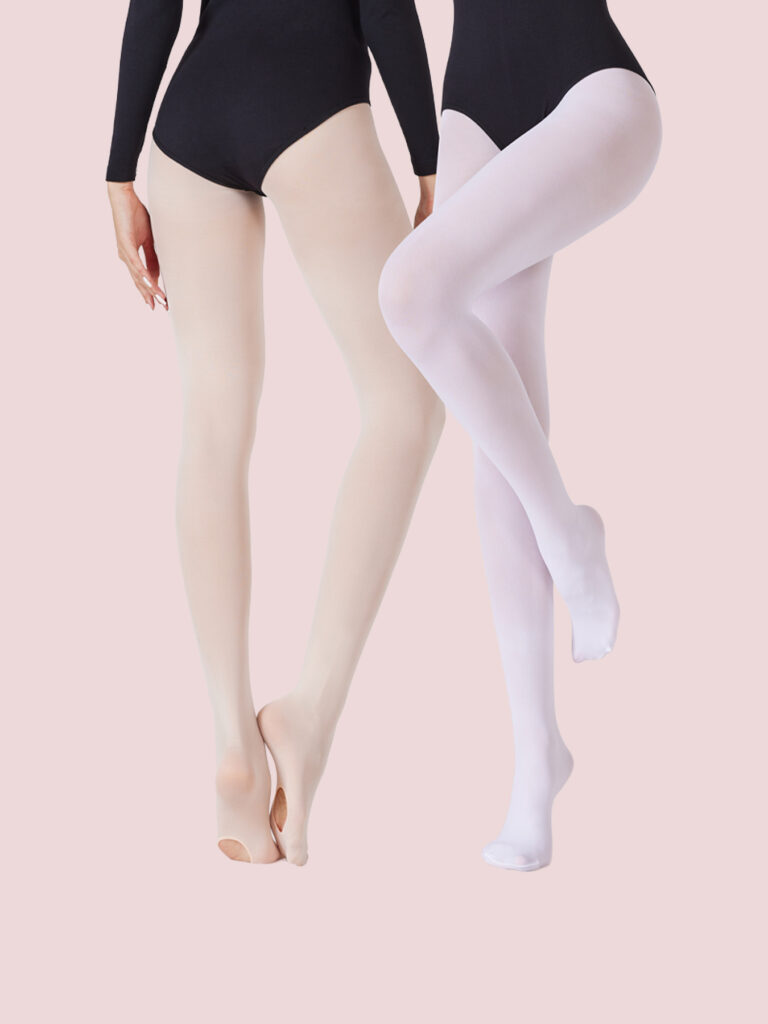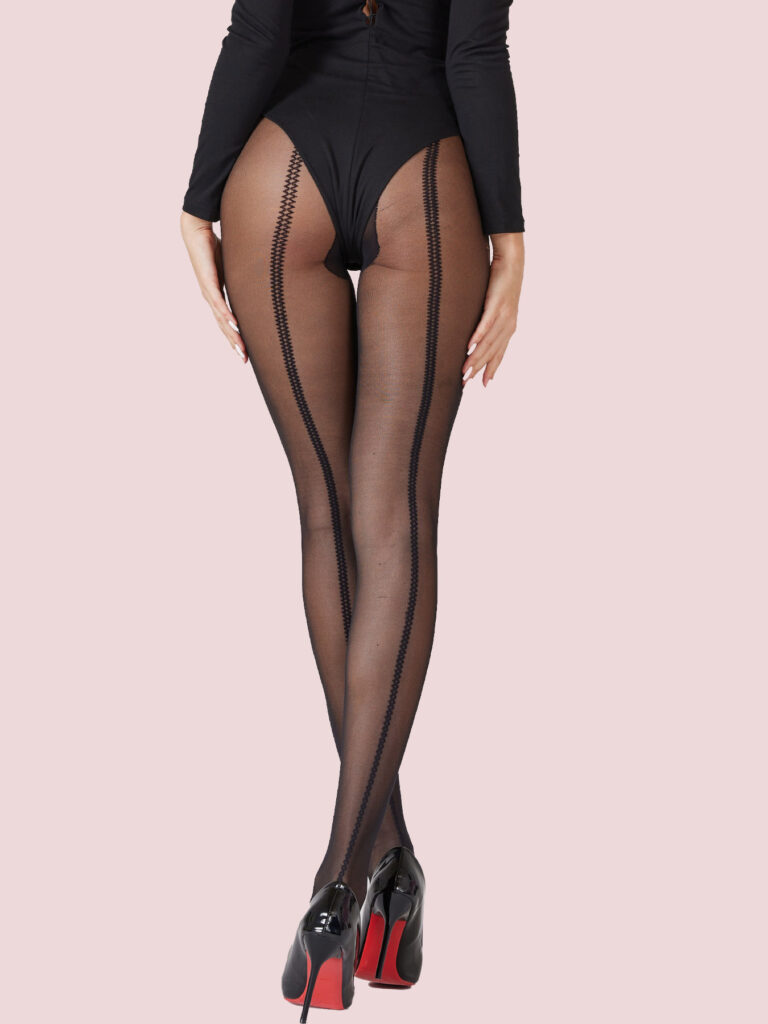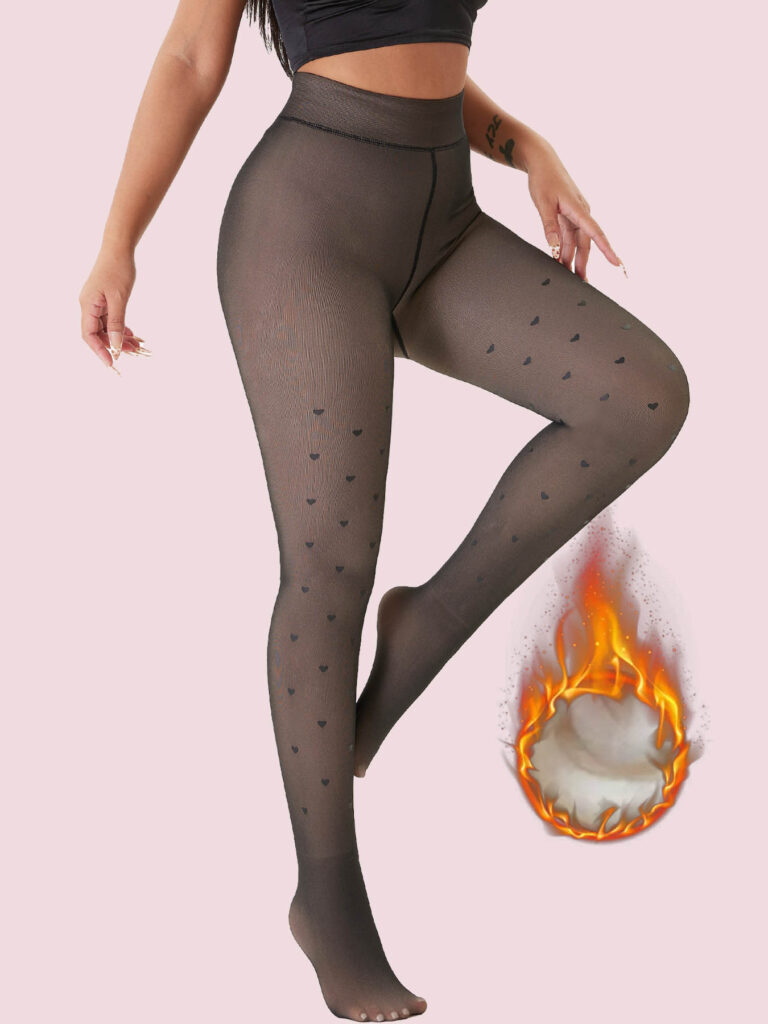
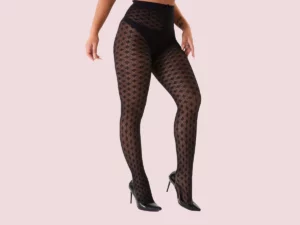
On flat artwork a circle looks like a circle, but on tights an oval is what you see. A check may look great as a tablecloth but will widen on the thigh. This distortion is not a defect with the custom knitted fabric. As it is intended to stretch over the body, the design will also stretch.
A sample is the reliable way to judge a motif at its intended wearing stretch: connect the artwork to the knit, then assess the finished garment on a representative wearer. Laseta can help brands review how motif scale and placement translate to a knitted construction before a custom pattern is approved.
- Developing a custom jacquard design? Contact Laseta with the artwork, repeat dimensions, target size, and color combination. Request a free sample pack of existing patterned tights to compare motif scale and stretch while the custom sample scope is confirmed.
- Set motif scale and placement before production sampling.
- Approve finished pairs to reduce pattern-related returns.
Why Do Knitted Motifs Change Shape When Tights Are Worn?
Jacquard designs are made from yarns and loops knitted into the fabric. They are not printed designs on a flat surface. As the tights stretch the loops open up and move. If a fabric stretches more from side to side than from top to bottom a round motif will appear wider and a square motif will appear to be of a strange rectangular shape. Thus when assessing Jacquard designed tights the motif must be viewed at the stretch at which they are to be worn.
How do loop structure and yarn affect the motif?
The dimensions of a knitted fabric, as well as its recovery, are influenced by loop length, stitch density, yarn thickness and yarn elasticity. The knitting structure also determines the extent to which a fabric can be stretched, as well as its abrasion resistance. Therefore, a motif that has been drafted as a flat design cannot necessarily be scaled up in the same way in order to produce corresponding motifs on the leg. The knitting plan must be adapted to the intended fabric and garment form.
Why does one motif look different around the leg?
Ankle, calf, knee and thigh areas of the leg stretch the fabric differently. An area of close knitting near the ankle will inevitably appear to open up on the calf or on the thigh. It is essential to check Patterned tights wholesale orders on a representative size, against a representative body, particularly in the areas where the design will be at its most visible.
A good checkered style is the LD-136279. Study the repeat of the geometric pattern on this style on the different parts of the legs. Study the finished sample at the size intended to be produced. The patterned hosiery development brief should indicate where straight lines and diamonds are supposed to align.
Before requesting Laseta to create new artwork for your customer’s fabric, request a Free Sample Pack of the patterned styles that are already available. Examine the repeats flat and folded as legging and see how they stretch and change shape. These samples do not approve new artwork.
Which Jacquard Designs Show Distortion Most Clearly?
Designs with straight lines and alignment marks reveal uneven stretch easily. Small scatter motifs can hide small amounts of movement but the spacing between them must appear intentional. Instead of flagging up every variation as a defect, the design brief should state what amount of change is acceptable.
What makes checks and diamonds demanding?
For checks and diamonds, the horizontal and vertical lines need to relate to each other. On stretchy fabric, the lines may distort or become longer than others. If very much importance is placed on exact alignment then during sampling the motif size and/or the knit construction can be altered to try to and achieve this. However, on a garment the pattern will appear to be in balance on the body and not as a strict grid on the hanger.
Why can dots tolerate some movement?
Even the individual dots can be very pretty as long as they are stretching to about the same length and have the same width and spacing between them. The sheer dot tights, style LD-136205 show a design where the motif is also the main part of the product’s retail appeal. Take a good look at the dots around the knee, calf and thigh and don’t rely on only one nice picture to see if the repeat spacing is flattering.
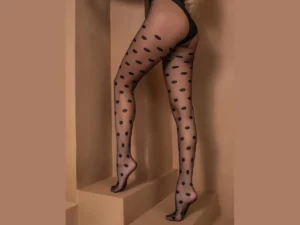
An elongated or softened pattern on the leg can also be designed by the brand. The most important thing is to check and approve the intended look before proceeding to bulk production and then always compare new samples using the same size and under the same viewing conditions. When sourcing patterned tights wholesale, the approved size and fit of previous samples has to remain the reference for all later samples.
What Should a Custom Pattern Sample Prove?
The first sample produced from an artwork should confirm whether or not the motif has been successfully translated into a stable knitting plan. In many cases, a factory will have to adjust a design to accommodate a machine, stitch configuration, yarn and denier of stock produced. This development work is not merely enlarging an image file.
What belongs in the pattern map?
Reinforce the dimensions of the motifs, the spacing between repeats, the direction of the design, where it should commence and whether it is to extend the full length of the leg. Note any specific locations where motifs are to be situated such as the ankle or where repeats meet at seams. The reference image shows what the design will look like but does not detail the actual stitch configuration.
How should flat and worn samples be compared?
Compare both views, the flat sample will indicate any problems with your knitting and show up any inconsistencies in the repeat of your design. The worn sample will show you if your motif has worked at the stretch you require. A design that looks too close together when relaxed could look fine on the leg and vice versa for large motifs. Compare both legs and record any problems or changes in placement.
Note the type of jacquard knitting equipment that Laseta has for creating knitted motifs and patterned hosiery. From your free samples observe the motif scale, size range and color contrast and use this information when discussing a new custom pattern with Laseta. Also note that an existing sample shows the construction but does not approve the new artwork. Agree a separate scope for any custom sampling that may be required.
What Can Dyeing and Boarding Change After Knitting?
A knitted sample is not always the finished retail reference. For example hosiery can be seamed, dyed, dried and boarded after it has been knitted. The process of dyeing allows fibers to relax and shrink. Subsequent shaping will then fix the hosiery into the desired finished dimensions. The contrast, surface and scale of the knitted sample as an unfinished tube may also change as a result of these processes.
Why should the final color be part of pattern approval?
A subtle motif is only visible if there is sufficient contrast with the background. For approval of subtle designs, it is crucial to check the design in the same color combination and finishing as intended. In order to compare existing motif styles of patterned tights, the patterned tights collection can be of help when specifying a custom design.
What should final inspection compare?
Compare finished sample to approved repeat for both legs including overall dimensions and pattern placement. Check for misaligned patterns and mismatched legs during final inspection. Any change in appearance after dyeing or boarding must be resolved before approving production and finished knitting sample cannot represent all aspects of finished garment.
When approving custom patterned tights the buyer should approve a dyed and shaped pair of tights within the approved sizes. This ensures that the motif, the fit of the tights and the finish have worked well together. If your team need to compare designs against each other we can supply a free sample pack of existing designs of patterned tights, showing the different motifs within the various sizes. The team can then compare the different designs and approve the final brief. The approval of the artwork and the pattern map can then be given on the relevant development sample.
FAQs
Q1: Why do dots become oval on patterned tights?
A1: The knitted fabric stretches while it is worn. Thus a round motif appears wider or longer when it stretches more in one direction than in the other.
Q2: Can a factory make any design from a photograph?
A2: This picture gives an impression of how the product looks. The real design has to fit to the knitting structure, to the yarn, to the machine and to the desired stretch. Sampling has to prove what can be made.
Q3: Should buyers approve the patterns before dyeing or after dyeing?
A3: Approval of final product on dyed and cut sample. Subsequent processes can affect dimensions and contrast.
Request Patterned Tights Samples for Review
A production-ready pattern brief will clearly state the motif scale and placement within the structure of the knit, the target size, the color contrast and how it will look after dyeing and boarding. We can also assess the translation of the motif to knit and agree an approval sample for custom patterned tights.
Outline the artwork, repeat dimensions, intended motif placement, colors and target size. We will send you a free sample pack of our current patterned tights so you can see the motifs flat and on a leg. The sample tights will give you an idea of the construction and stretch of the tights, but they will not constitute an approval of your custom artwork. Please contact Laseta to confirm the scope and terms for a custom jacquard sample.