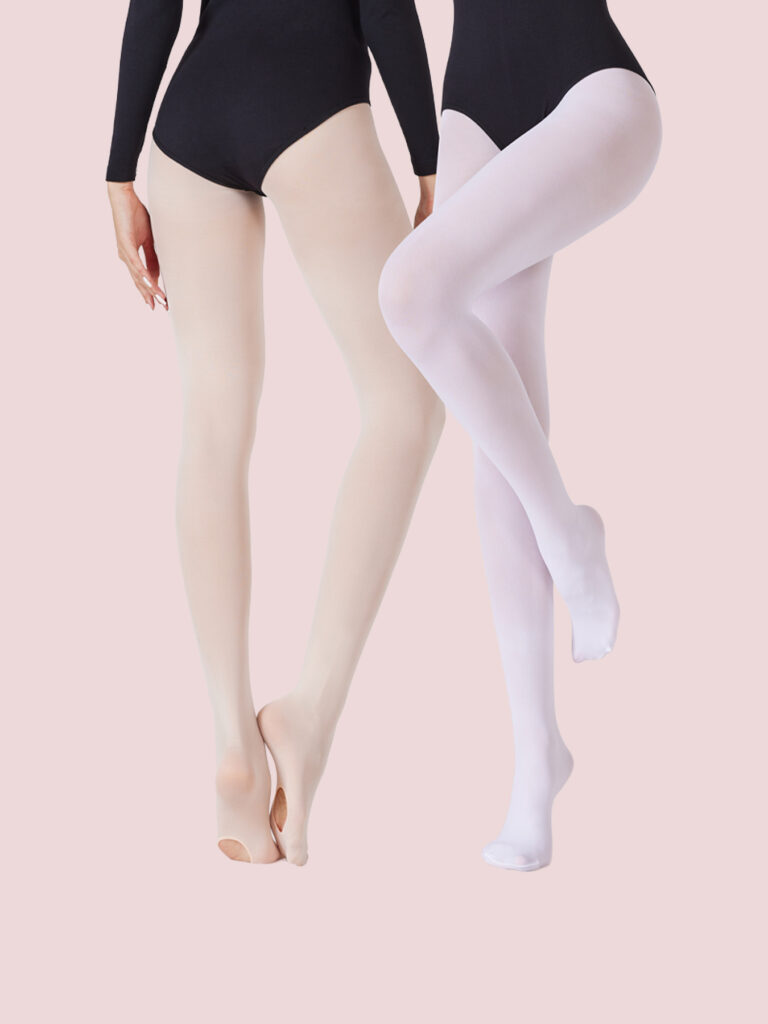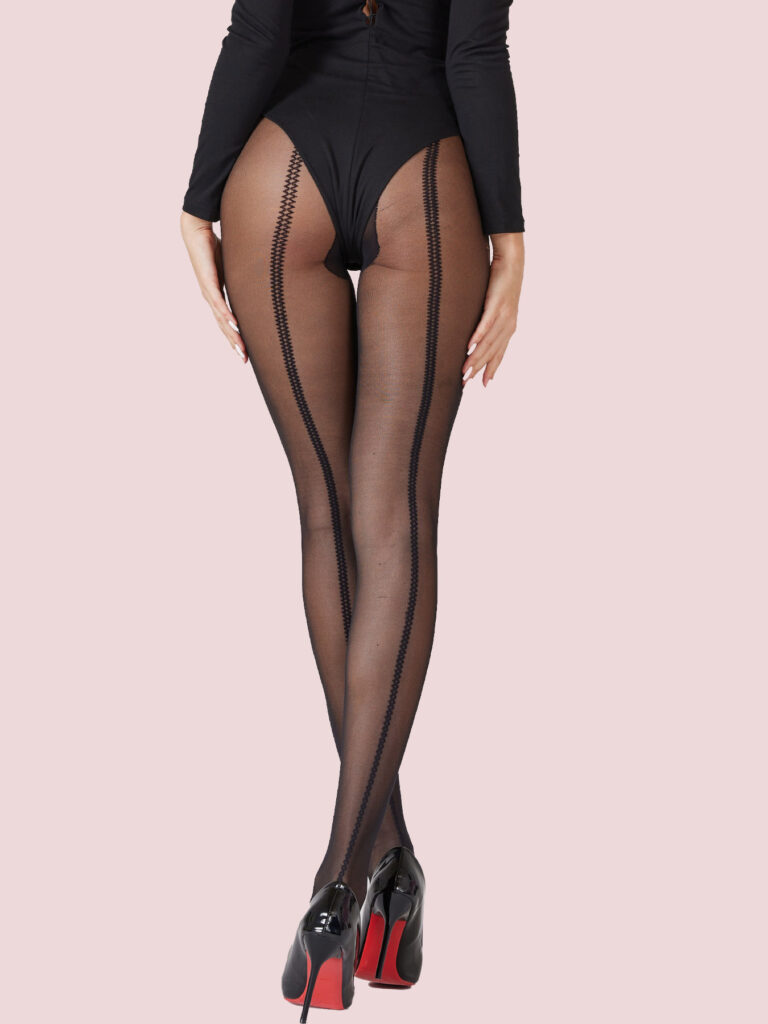
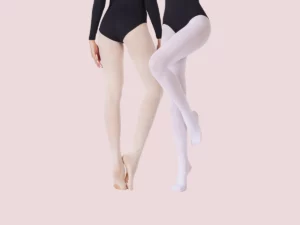
A studio placing an order for a whole class of dancers has needs far removed from that of an individual shopper. In addition to the appropriate foot construction and dependable fit through multiple sizes, they require colors that will look consistent beside their team uniforms. The small opening under the foot of convertible dance tights can also determine whether or not a dancer can move from shoes to bare feet without having to remove and re-tie the garment.
The edge of the sole opening is pulled in different directions as dancers move. If it wrinkles, folds, or feels abrasive inside a shoe, the dancer will notice. Laseta helps studios compare convertible dance-tights constructions and plan sample trials around their footwear, size range, and class routine.
Before placing a class order, request a free Laseta sample pack and test the opening in both covered-foot and pulled-back positions with the studio’s usual shoes. Share the age group, footwear, size range, colors, and estimated quantity so the sample review answers the needs of your class.
What Does a Convertible Opening Need to Do During Class?
A convertible tight has fabric that goes around the foot but can be pulled back to reveal the forefoot. A footless tight is tight everywhere except above the foot and doesn’t cover the ankle and foot. The main difference between these two types of tights is how they work with ballet slippers, pointe shoes and barefoot floor work. A simple order of “dance tights” would not convey the type of foot construction.
How does the opening differ from a footless design?
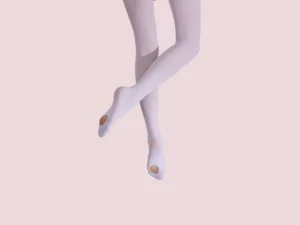
The opening must function in two states – closed over the foot and open to reveal the forefoot of the dancer. The edge of the opening must rest smoothly against the sole of the foot and the inside of the shoe when it is closed. When the fabric is pulled back to reveal the foot of the dancer, it must do so smoothly and without resistance or awkward tug. Sample will approve these aspects and they are dependent on the opening, fabric, finishing of the sample, the shoe and the foot of the individual.
Where should the opening sit?
The same opening can bunch up in a shoe and lie flat if placed too close to the toes. An opening placed too far back in the design may not even reveal enough of the toes, the forefoot. Try looking at the fabric while the dancer is pointing and flexing their foot, then pull the tights back and look at the same area. A 2D product image can’t reveal how an edge will behave with a change in tension to the tights.
Laseta has developed different foot constructions within the dance tights collection on the website. This intended design should be clearly indicated on the purchase order and on the sample label before we discuss color and packaging.
We will compare the foot constructions for you before you choose a style. To compare the styles of our products, you can request a free sample pack. We can then examine the sole opening of the available product samples and select styles for a class trial.
Why Can the Sole Opening Become a Wear Point?
Knitted fabric is made with rows of interlocking loops. The loops in hosiery allow for stretch, and the yarn elasticity and fabric structure then allow the fabric to recover from the stretch after it has been released. A convertible opening is used at one edge of the stocking and therefore its behavior cannot be confused with the rest of the stretch across the calf.
What should recovery look like after use?
Compare the worn sample’s relaxed opening to an unworn identical style and size. Notice if the edge has widened and is still stretched, if it’s begun to curl, if there are loose loops, or if it no longer sits flat. The extent to which nylon and elastane blend, the loop structure and local finishes all impact on this test. Repeat the foot transition test enough times to simulate the actual studio routine, then return to the edge of the sample after it has relaxed.
Can reinforcement stay low profile?
While reinforcement can help protect an edge, a thicker ridge can be a problem inside very tight shoes. Laseta’s convertible transition ballet tights, style LD-156125 have a reinforced sole opening and are made of 85% nylon and 15% spandex. Try out the sole opening on dancers wearing the shoes that your studio uses.
Reinforcement should not be judged by pinching it between two fingers. The edge of a usable pair of tights must withstand being handled without digging into your foot, getting caught in your shoe or affecting how the tights sit on your foot when you’re wearing them.
How Should a Studio Test Samples Across Real Movement?
Free samples go through a class trial in both wearing positions to find out where the edge of the garment sits, whether it moves, and whether dancers have to stop and reposition it. The dancer’s feedback on the free samples is then shared with Laseta before any development changes are discussed.
What should dancers test in both positions?
First, put the tights on with the foot in them. Check for pressure under the foot, for the tights to be pulling on the toes, for the edge to catch in the shoe. Then go back and repeat the movements that required exposure of the forefoot. The edge should move freely without pressure, and then return to its original form after release. Be sure to note the shoe as well as the activity for each of these observations, because a slipper and a pointe shoe make different contact points with the tights.
Why do multiple sizes matter?
A single medium sized sample does not make a class. A longer leg creates different pulling on the foot part and hip and rise measurements create different amounts of stretch in the lower parts of the garment. Test the lower and upper samples of the intended size range. Check out the waistband, crotch, gusset, leg length and knee movement in the sample. A good opening is not enough if the rest of the tights are uncomfortable and move around.
This short sample review sheet can capture the essential points for a private label dance tights program: size, height of the dancer, type of shoe, transition comfort, opening recovery and any edge distortion. It is also very important to receive sample sizes that correspond to the actual ages and fit range of the students in your studio, not just the size found in the showroom. Also it is crucial for the dance tights manufacturer to know if the order is meant for studio classes or for the stage, because the sample review has to correspond to the typical wear of the tights.
How Can Buyers Keep a Class Order Consistent?
A studio may want to order same style in different sizes to match uniform that they currently have. Different shades of pink, white and skin tone can look different in rehearsal, daylight and on stage under different lighting. Compare finished samples under lighting most similar to where they will be used and keep one pair to use as color reference for future reorders.
How should colors and product codes be controlled?
Convertible, footless and footed styles within private label dance tights should be kept as separate products even when colors and packaging are similar. Approved size range, color reference and foot construction should be added to the order record. Laseta’s 40D transition style LD-126229 is available in brown, white and pink, as well as offered for customization. Please note that confirmation of shade will be on finished physical samples and not by the color name only.
When should a buyer involve the manufacturer?
A complete integrated hosiery production facility enables the studio to coordinate the different stages of production i.e. knitting, seaming, dyeing, setting and drying while a sample is being developed. The company also functions as an OEM or ODM manufacturer to produce hosiery of various sizes, colors, and with custom labels and packaging as required by the studio for distribution to groups of people.
Request a free sample pack of dance tights from Laseta once you have established the trial requirements. Ask for the target age group, footwear, size range, desired colors and estimated quantity to be ordered for the class. Check what samples are available and ensure you approve the correct construction before placing the order for the class.
FAQs
Q1: Can convertible dance tights replace footless tights?
A1: Some activities are supported by both types but they are made differently. Convertible tights have a foot section that can be opened, while footless tights do not have a foot section and are always without the foot.
Q2: What should the buyer inspect first on a convertible sample?
A2: Check opening position, edge comfort and recovery after several repeated turns. Then check the height, leg length and wearing comfort while moving.
Q3: Can studios order customized colors and packaging?
A3: We support customization discussions for dance tights, including color, sizing, labeling, and packaging. Share the studio’s requirements when requesting a free sample pack, then agree on the details of any customized sample before a bulk order.
Request Dance Tights Samples for Studio Testing
A studio order is easier to repeat when foot construction, opening comfort, recovery, size range, and uniform color are checked together. Laseta can help studios compare available dance tights and organize private-label specifications before approving a class order.
Please provide information regarding the following: 1) Age group of students taking classes, 2) Footwear to be worn with tights, 3) Size range, 4) Color reference, 5) Number of classes per style and 6) Movements tights will support. We can send a free sample pack of currently available dance tights for you to test sole opening in both tied positions and compare fit through various sizes. If studio requires custom colors, labels, etc. please contact us to confirm custom sample scope and terms separately.