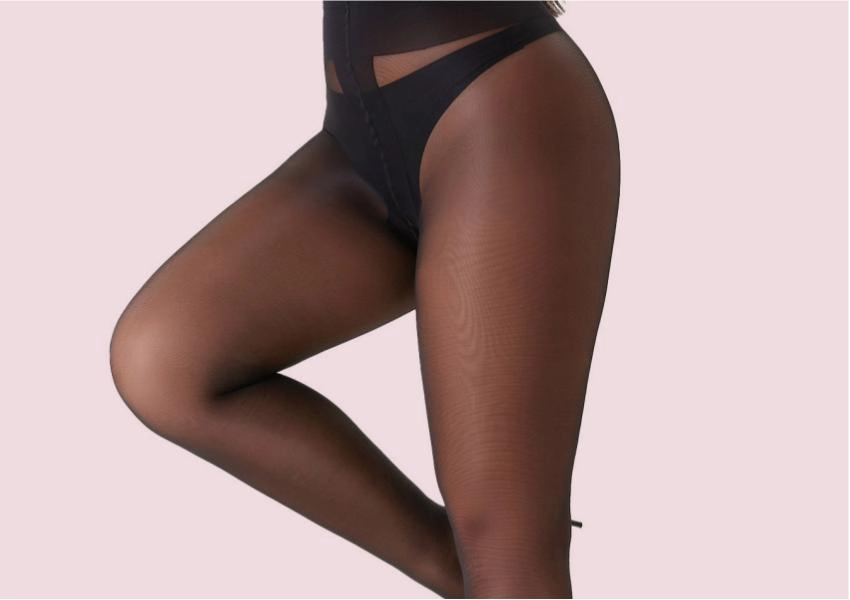
A sandal-friendly sheer tight has very little room for error. The customer is buying it because the hosiery should disappear around the toes while still giving the leg a finished look. If the opening twists, the edge cuts across the forefoot, or the shade turns gray in daylight, the product becomes more visible than bare skin.
That is why invisible-toe sheer pantyhose deserves their own buying process. It is not simply a regular sheer tight with a missing toe. The opening, edge finish, leg tension, crotch gusset position, and shoe choice all affect whether it looks discreet in sandals and bridal shoes.
Decide Whether the Customer Needs Toeless or Ultra-Sheer Toe
Open-toe hosiery can mean two different products in a shop. One is fully toeless, with an opening that leaves the toes visible. The other has an ultra-sheer reinforced toe that is still covered but designed to be less noticeable. Buyers should use separate product names and product photos because the customer expectation is different.
A Toeless Design Needs a Stable Opening
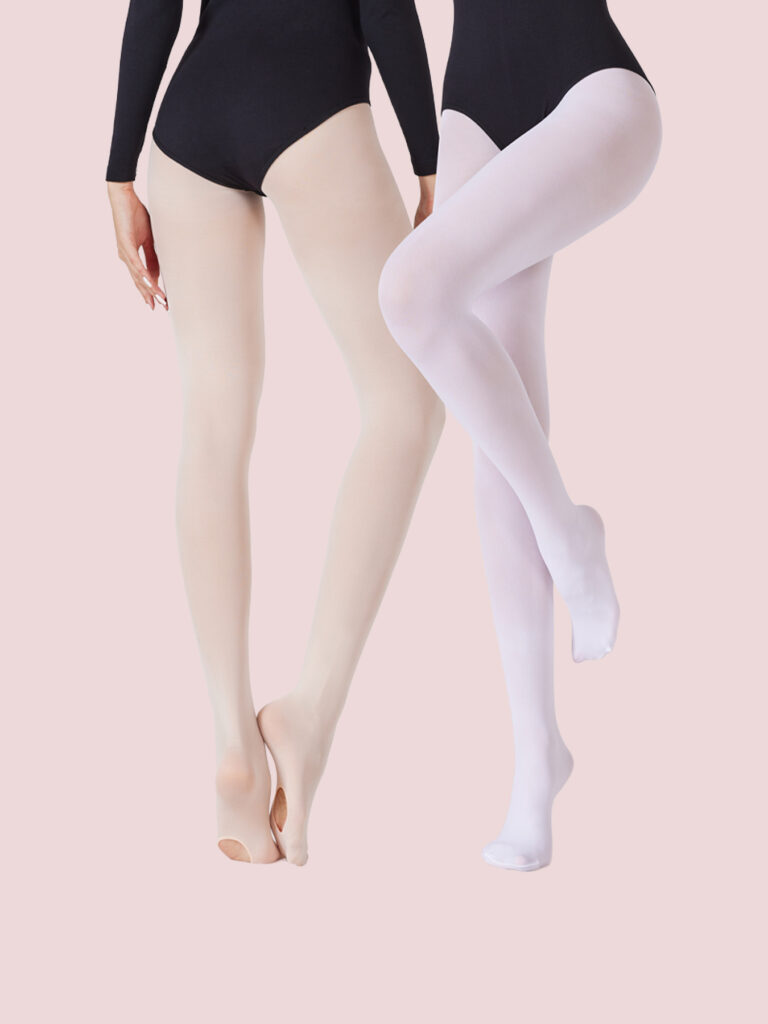
10D toeless pantyhose provides a clear starting point for a true sandal-toe pantyhose offer. The main inspection points are the shape of the opening, the softness of its edge, and where the tension sits around the ball of the foot. A tight edge can dig in; a loose edge can creep backward inside the shoe.
Sample testing must use the intended footwear. A slim-strap sandal, a heeled mule, and a closed-front bridal shoe create different friction and pressure. Ask testers to walk, stand, and sit for a realistic period. Then inspect whether the opening remains centered and whether the leg fabric has rotated. A product can look invisible in a static photo but misbehave after ten minutes in a narrow sandal.
Ultra-Sheer Toe Has a Different Benefit
Some bridal sheer tights need the comfort of a full foot rather than a toeless opening. In that case, an ultra-sheer toe can be a better retail answer. It helps smooth the leg while keeping the toe line quiet in a more covered shoe. The pack needs to show that distinction clearly. A buyer should never use “invisible toe” as a loose label for both options.
Get the Sheer Leg and Nude Shade Right
Bridal footwear is often photographed close up. A nude sheer tight that is too cool, too gray, or too shiny can be obvious against the ankle and foot. Color approval should be done on stretched fabric, against more than one skin reference, and under daylight as well as warm venue lighting.
Fine Denier Needs Honest Expectations
Most sandal-ready sheer-toe tights sit in a fine denier range. Flat sheer tights from roughly 3D to 15D as ultra-thin, with 20D moving into a little more presence. Fine coverage gives the desired bare-leg effect, but it also makes snags, dye streaks, and uneven knitting easier to see.
Core-spun yarn is useful where high transparency is a priority. Nylon contributes abrasion resistance, while elastane supports elastic, compression, and shape retention. Neither ingredient fixes poor construction. The buyer should review the finished sample after dyeing and boarding, because those steps affect final handfeel, dimension, and surface uniformity.
Keep the Bridal Assortment Calm
For bridal sheer tights, black is rarely the core story. A retailer is usually better served by a small nude ladder, a transparent option, and perhaps a barely-there sheen. Avoid launching too many similar nudes without a shade guide. The customer must be able to choose quickly when the purchase is tied to an event date.
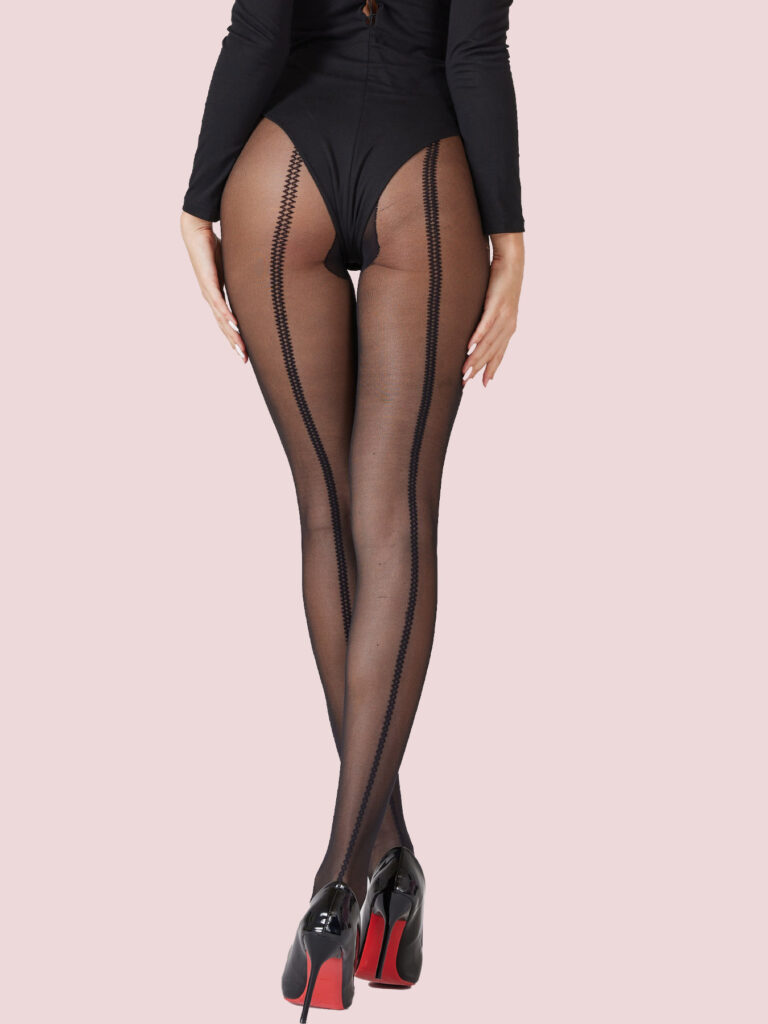
If a retailer wants a more editorial style, 20D sheer backseam tights shows how a distinct backseam can change the product’s role. It belongs in a vintage or evening-fashion lane, not in the core invisible-toe bridal offering. Clear range separation prevents a customer from treating a fashion detail as an invisible basic.
Check Construction Where the Customer Cannot Ignore It
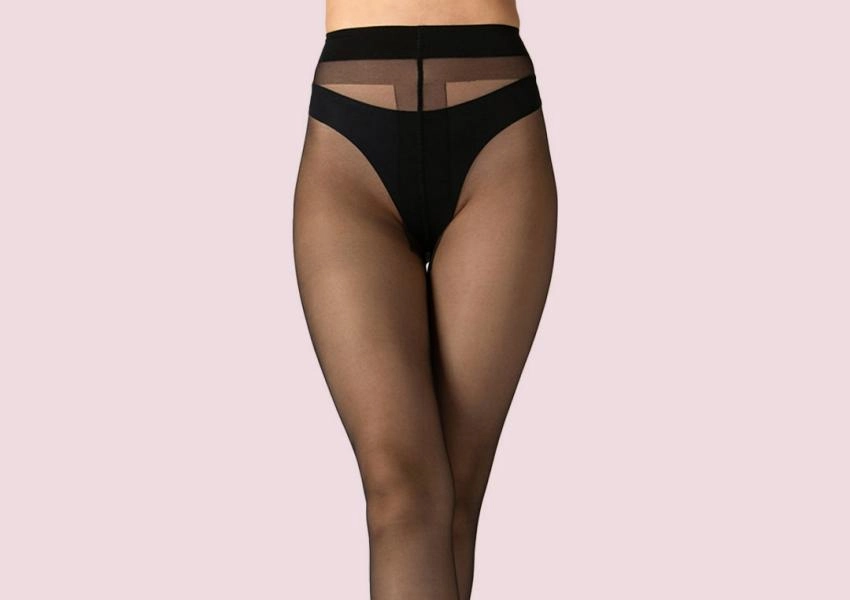
The toe is not the only construction issue. A wearer in a fitted dress or bridal skirt will notice a twisting leg, a low crotch gusset, or a waistband that rolls. Sheer-to-waist, bikini briefs, reinforced briefs, and various gusset constructions all create different silhouettes and fit behaviors.
Use a Shoe-Specific Wear Test
The sample checklist should include toe-edge position, foot comfort, heel slippage, leg rotation, crotch gusset recovery, waistband comfort, and shade appearance after stretch. Add a test at the upper size boundary. A product that works for a smaller foot and lower hip measurement can fail when more tension reaches the forefoot and leg.
Before packing, hosiery needs visual and dimensional inspection. For a sandal product, that visual check should include the opening itself: clean cut, even left/right placement, no loose threads, and no visible damage around the edge. Packaging can also snag delicate sheer goods, so the fold and compartment count should be approved with the product.
Do Not Borrow a Stay-Up Claim
15D glossy stay-ups are a separate product family for a buyer who wants to remove the pantyhose waistband altogether. They may suit some evening looks, but they should not be presented as a substitute for sandal-friendly pantyhose unless the garment, shoe, and event use actually fit. A stay-up band has its own skin contact, sizing, and slip considerations.
Turn Sample Approval Into a Clean Retail Launch
Laseta can provide end-to-end support to a later-stage discussion of yarn, denier, toeless shape, color, size range, brand presentation, and bulk inspection. The key is to hold the approved performance, not merely to approve a flattering photograph.
Request a free sample pack early enough to test with real shoes. Include a toeless option, an ultra-sheer full-foot option, and two nude directions. Put every sample on a tester, not just a display leg. The buyer will learn more from a short shoe trial than from a long written specification.
When a bespoke line is justified, hosiery customization support can translate the decision into an order brief rise: toe construction, edge finish, denier, shade, crotch gusset type, waistband, size grading, packaging, and care notes. Add photos of the approved toe opening and a measurement tolerance. Those details prevent a bulk order from drifting away from the sample.
Product pages should show the foot in the actual type of shoe. Close-up photos are essential. They answer the question the customer is really asking: can the hosiery remain unobtrusive once the sandal is on? A clear answer at launch cuts down on returns caused by a mismatch between a product photo and real use.
FAQ
Q1: Is toeless pantyhose better than ultra-sheer toe pantyhose for sandals?
A1: A true toeless style is better when toes must remain fully visible. An ultra-sheer toe can be more comfortable in covered bridal shoes or sandals with a less exposed toe area.
Q2: What should buyers test around the open toe?
A2: Test edge pressure, opening position, rotation, shoe friction, loose threads, and whether the opening stays balanced after walking.
Q3: Why should bridal samples be checked in daylight?
A3: Nude hosiery can shift in appearance under different light. Daylight testing helps reveal a gray cast, uneven sheen, or shade mismatch before product photography and bulk approval.