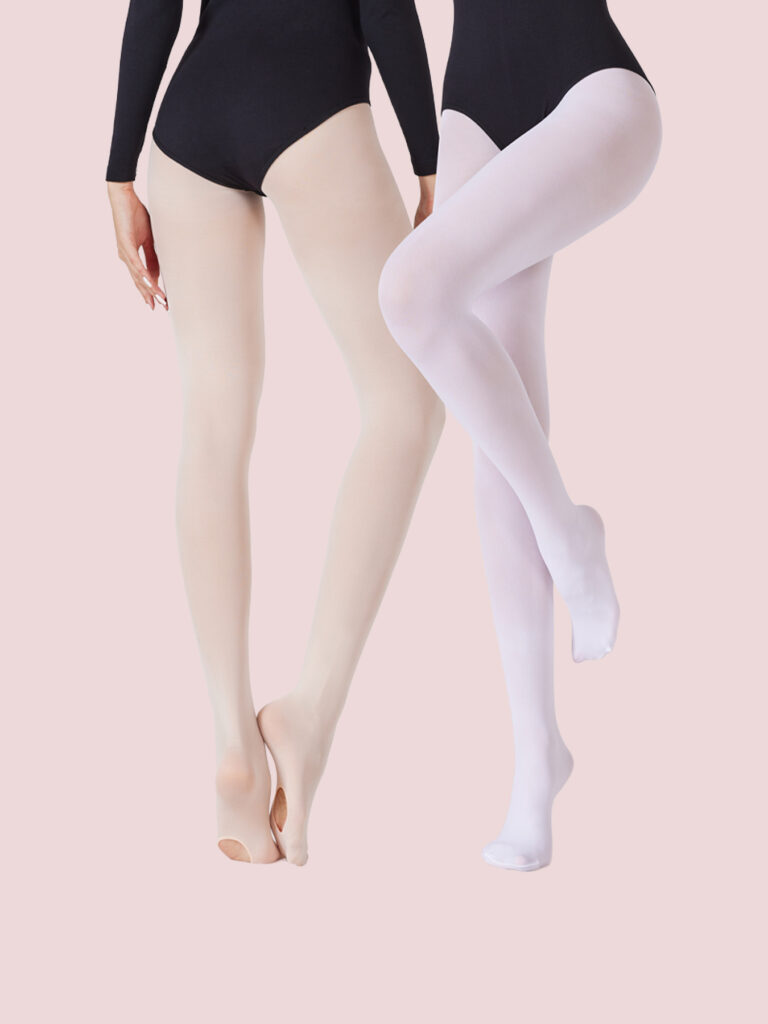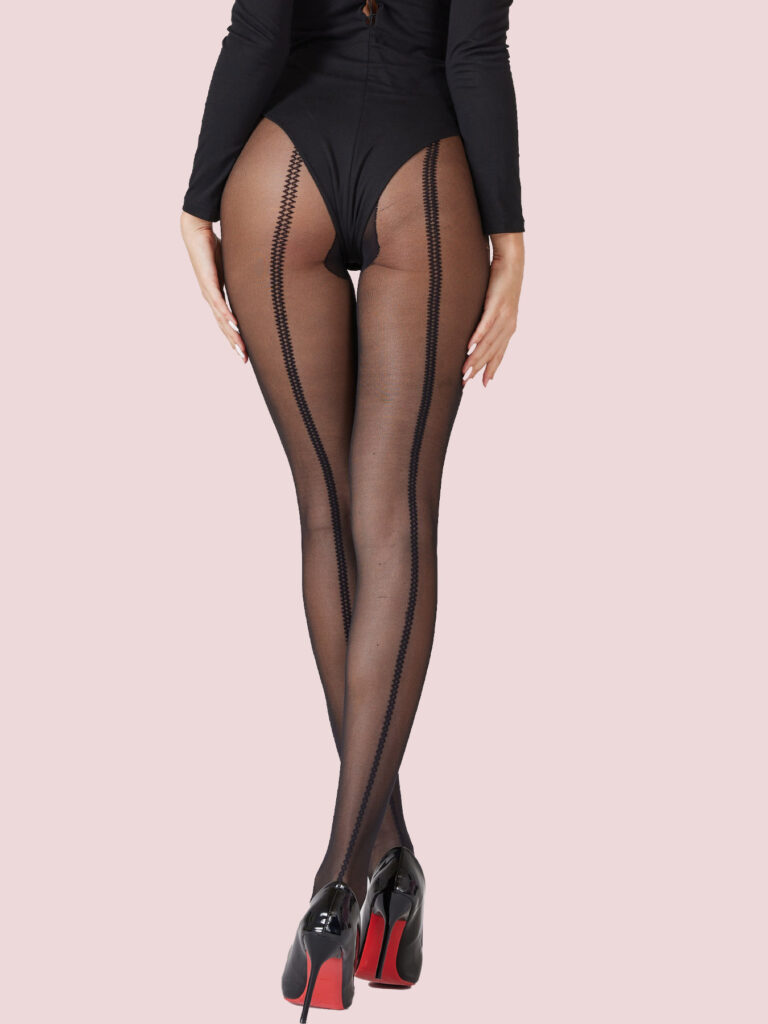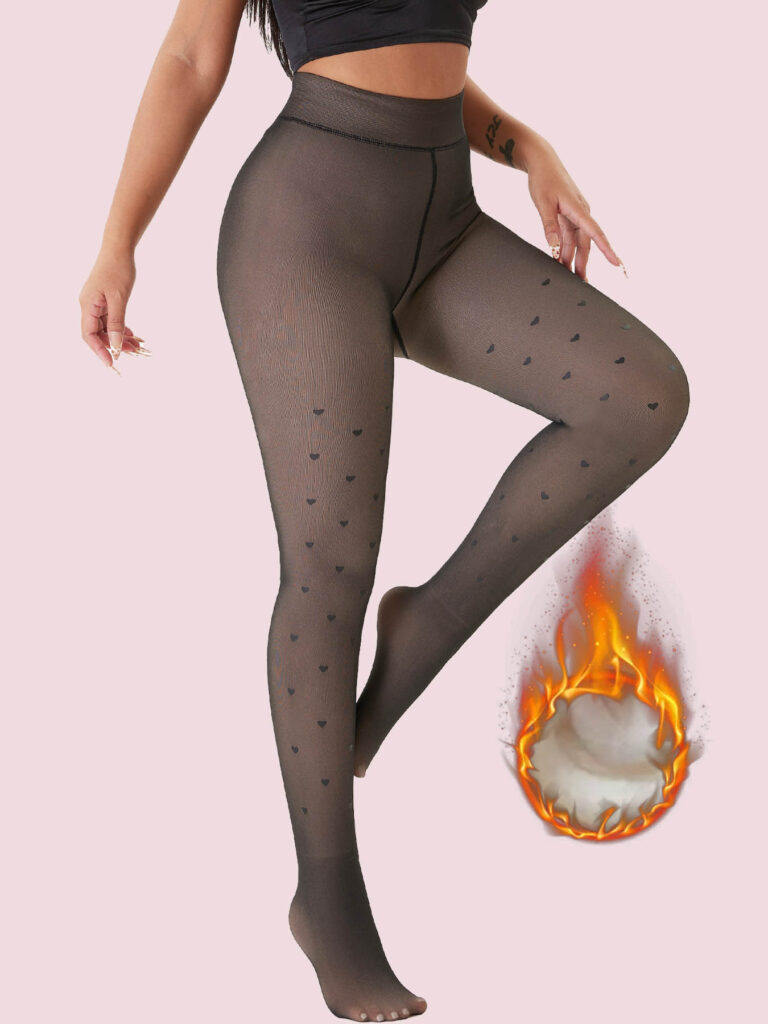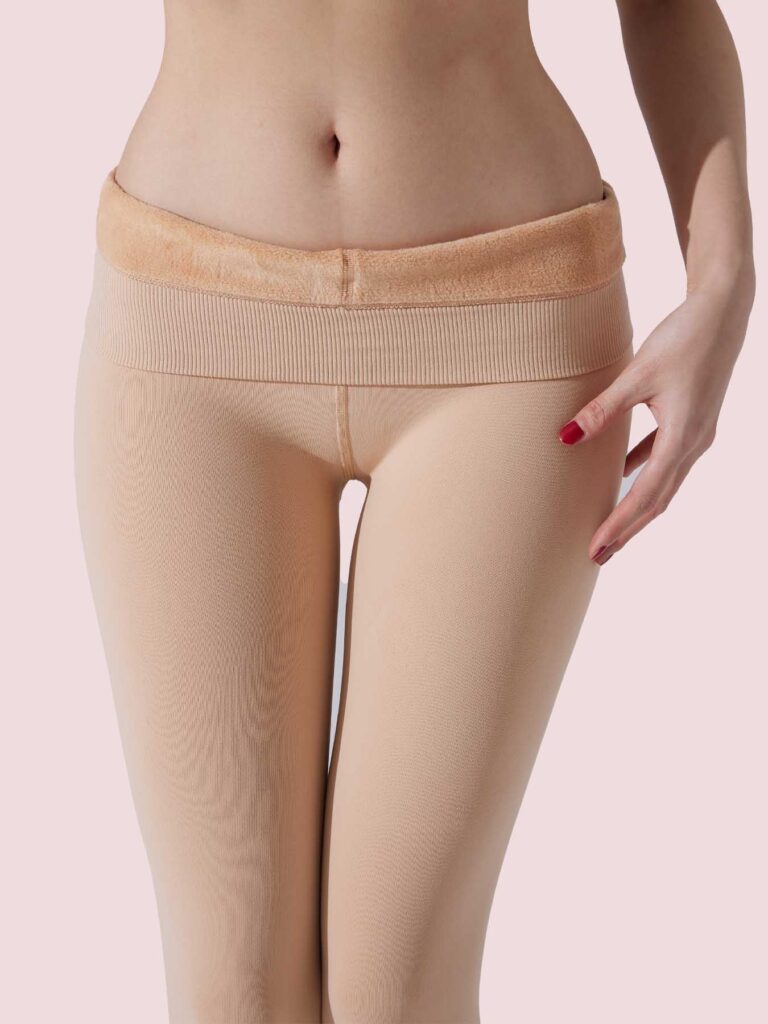
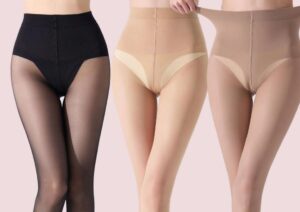
The sell-through question behind 20D vs 40D control-top tights is not only about thickness. It is about what consumers expect when they read “sheer,” “control,” “shaping,” and “comfort” on the same package. A 20D pair can look polished and light, but it may feel too fragile for some channels. A 40D pair can feel safer and smoother, but it may look heavier than the customer wanted.
Buyers need to decide what the product is supposed to do in the retail range. Is it a daily office basic, a smoothing layer under dresses, a semi-sheer shaping tights option, or a high-waist tummy-control tights style for firmer body shaping? Each answer changes the denier choice.
What 20D Brings to the Shelf
20D control-top tights usually sit in the sheer control lane. They give more cover than ultra-thin 5D or 10D hosiery, yet still read light on the legs. This makes 20D useful for officewear, service uniforms, evening looks, and warmer-season assortments. It also photographs well because the leg line still looks refined.
The downside is durability perception. Consumers may expect control-top construction to feel stronger than ordinary sheer tights. If the leg snags too easily, the customer may judge the whole product as weak, even if the control brief rise works. That is why reinforced toes, yarn recovery, and packaging instructions matter more in 20D styles.
20D Needs a Softer Control Promise
Buyers reviewing 20D ultra–sheer control–top pantyhose should position it as sheer control tights rather than heavy shapewear. It can polish plus light support. The waistband should stay flat, the control brief rise should not cut into the body, and the leg should keep a clean sheer finish.
What 40D Changes for Retail Buyers
40D is close to the sheer-to-opaque threshold used in hosiery classification. It still can look semi-sheer, especially in lighter colors or under bright light, but it carries more body. That makes 40D useful when customers want more confidence, better coverage, or a stronger smoothing feel.
For sell-through, 40D often works well in autumn, winter transition, and fuller-size channels. It can also reduce hesitation for consumers who worry about runs. The tradeoff is visual weight. A customer searching for body shaping sheer pantyhose may reject a 40D pair if it looks too dense under formalwear.
40D Should Be Tested Across Sizes
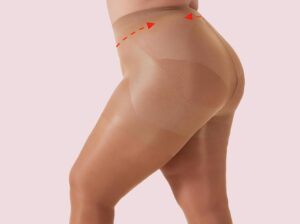
The upper size range often reveals whether a 40D is a true shaping product or simply a thicker tight. 40D plus-size hip control sheer tights can be used as a reference for micro-pressure shaping, hip control, and a fuller coverage direction. The buyer should check waist rolling, thigh stretch, and whether the control panel creates a visible edge.
Compare Denier by Channel, Not by Preference
Control pantyhose denier should follow the channel. For office and uniform retail, 20D may sell better because it looks discreet and pairs with pumps or flats. For marketplace customers who read reviews before buying, 40D may feel more reassuring. For boutiques, the right answer may be one 20D core nude or black plus one 40D seasonal shaping SKU.
The test should include first-touch feel, pull-on effort, seated comfort, toe pressure, and leg appearance under tension. Spandex(Lycra) helps recovery, while nylon adds abrasion resistance. But fiber choice alone does not decide sell-through. The buyer still needs the right promise on the package.
Packaging Language Affects Returns
Avoid selling 20D as firm shaping if the product gives light control. Avoid selling the 40D as barely-there sheer if the leg reads denser. Compression tights for women also suggest a stronger function than ordinary control-top tights. If the product is not built for that claim, reviews will expose the mismatch.
Use Samples to Set the Assortment
A small sample pack can answer more than a spreadsheet. Buyers can request a free sample pack with one 20D sheer control option, one 30D bridge option, and one 40D shaping option. Ask fit testers to wear each pair for a short seated and walking trial. A style that feels good for five minutes may roll after twenty.
For a bridge SKU between 20D and 40D, women’s 30D pantyhose with control top can help buyers compare control feel, reinforced toes, and moderate coverage. When the buying team needs a wider view, the control-top tights is useful for mapping sheer, semi-sheer, shaping, and seasonal control-top roles without forcing one denier to carry the whole range.
Laseta can provide end to end support for fabric, color, size, packaging, hang tag, and care label work after the denier lane is chosen. Its production background covers hosiery knitting, dyeing, finishing, warehouse support, and QC inspection. For a private label program, that matters because the approved 20D or 40D handfeel has to repeat on reorders.
Sell-through should also be judged by the second order, not only by the first sell-in. A retailer may clear a first 20D shipment because the price and product photo look right, then lose repeat demand if snag complaints rise. A 40D style may move more slowly in warm months but create better reviews in a channel where consumers value coverage. Buyers should track returns by reason: runs, waistband rolling, too heavy, too sheer, wrong size, or uncomfortable control. That small return code set will make the next reorder much sharper.
For stores with limited shelf space, a two-SKU test is often enough: one 20D sheer control option in black or nude and one 40D semi-sheer shaping tights option for cooler months or fuller coverage. Marketplace sellers can test more shades, but they should still keep the denier story simple. Too many nearly identical control pantyhose denier choices can split reviews and slow the buying decision.
The size mix should be reviewed with the same care as denier. A 20D style may need more careful handling notes for larger sizes, while a 40D style may need softer waistband pressure so it does not feel restrictive. If the test group includes office workers, fuller-size customers, and occasional dresswear consumers, the buying team gets a cleaner read on which denier deserves the wider launch.
FAQ
Q1: Which sells better, 20D or 40D control-top tights?
A1: 20D often works better for sheer daily polish, while 40D can sell better for shaping, cooler seasons, and customers who want more coverage.
Q2: Is 40D still sheer enough for officewear?
A2: It can be semi-sheer, but it looks denser than 20D. Buyers should test it under store lighting and with the intended outfit category.
Q3: When should buyers request a free sample pack?
A3: Request it before final assortment planning. The pack should include 20D, 30D, or bridge samples, 40D, and size notes for the target channel.