When control-top tights roll down, the waistband gets the blame first. Brands selling control-top tights often see the same complaint. Sometimes the band is too narrow or too firm. Just as often, the real problem sits lower: the rise is short, the crotch gusset drops, the upper hip has too little room, or the shaping panel is pulling the garment toward the legs. A brand that only asks for “more elastic” may fix one symptom and make the wear experience worse.
Control pantyhose need a balanced upper body. The waist, brief, hip, rise, crotch gusset, and leg must work together across the size range. Brands selling control-top tights need that balance across every offered size, not only the middle sample. That is where a repeat complaint can be prevented, long before the product reaches a review page.
Why Control-Top Tights Roll Down After Sitting and Walking
The correction depends on what moves first. Ask a fit tester to describe the sequence after standing, sitting, walking, and bending. The whole garment may travel down, the top edge may fold inward, or the crotch gusset may sag and pull the waist with it.
Separate Edge Curl From Garment Migration
An edge that turns over usually points to the band width, edge finish, local pressure, or the way the fabric is attached. A garment that slides down as one piece may point to rise, upper-hip grading, or weak recovery. Both can be described as tights that roll down, but they require different development work.
Measure the relaxed waistband, stretched waistband, front rise, back rise, crotch gusset depth, and upper-hip width. Repeat the measurements after finishing. Heat setting is used to stabilize dimensions and elasticity, but the finished result still needs to be checked rather than assumed.
Do Not Use Pressure to Hide a Short Rise
A tight band can hold the product briefly while creating pressure marks and a curled edge. If the torso length is short, the garment is still searching for room. The wearer may pull it up repeatedly, then report that the waistband is uncomfortable and the tights will not stay in place.
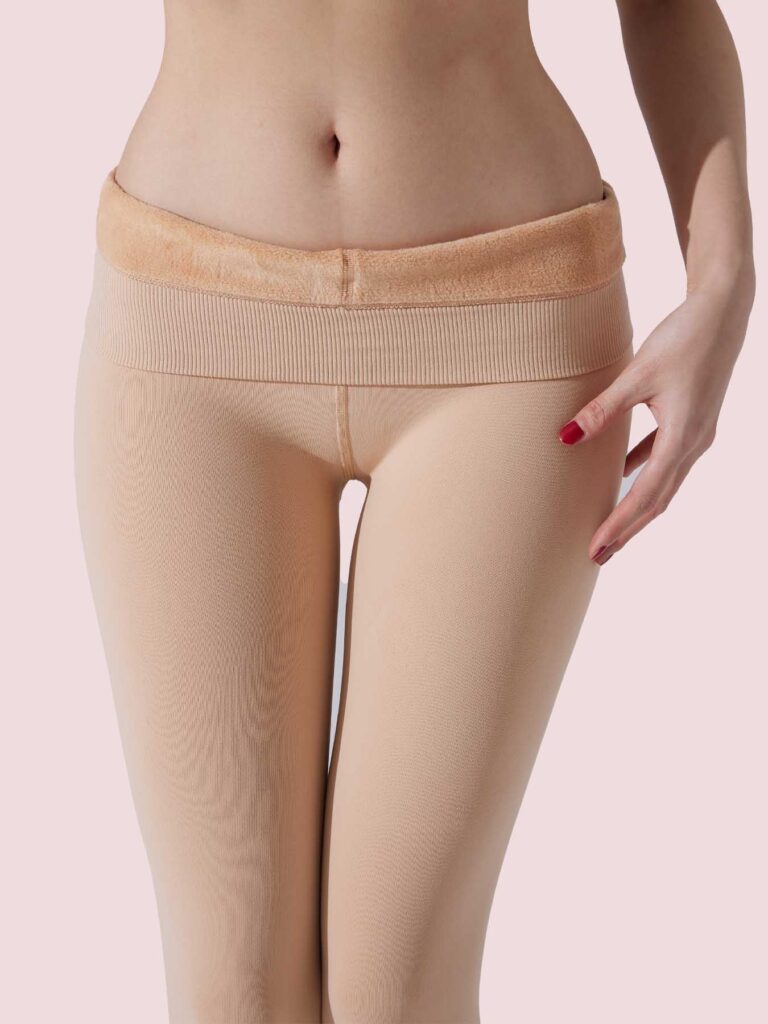
Brands should specify where the waist is meant to sit: natural waist, high waist, or below-waist control. “High-waist tights” is not a complete fit specification. The front and back rise, waistband height, and size grade still need numbers in the technical brief.
How Shaping Tights Manufacturers Should Balance Waistband Pressure and Rise
It should separate reinforced briefs, tummy-control and butt-lifting briefs, safety crotches, panel gussets, and seamless crotches because these structures change how forces travel through the garment. A shaping brief is not simply a tighter version of an ordinary brief.
Map the Support Zones
Ask where the brand wants support: lower abdomen, full tummy, hip, seat, or upper thigh. Then check where the denser knit or panel ends. A sharp transition can create a line under a dress or pull the lighter leg fabric downward. A very firm lower panel may also make the wearer lift the product repeatedly.
ה 40ד גרביונים עם שליטה עליונה reference is useful for checking a more covered leg with a control-top and reinforced toe. The buyer should compare the control area with the leg, not judge the top in isolation. The finished pair needs a smooth transition from brief to thigh when worn in the intended size.
Grade the Brief Across Sizes
An upper size is not solved by adding more leg length. Waist circumference, hip room, rise, crotch gusset depth, and panel placement all need attention. If a brand keeps the same brief geometry and merely scales it up, the waist can become too tight while the hip remains under-supported.
For a broader customer range, the plus-size tummy-control velvet tights direction shows why plus-size control deserves a distinct brief. A heavier leg, a larger upper body, and a tummy-control claim create a different fit problem from a fine sheer control style. The product should be tested on the full intended size range before the package is approved. That distinction matters for shaping tights because a firmer brief is not automatically a better fit.
What Private Label Tights Buyers Should Test Before Bulk Production
Recovery is the garment’s ability to return after stretching. Yarn choice, knit structure, heat setting, finishing, and construction all play a part. A first pull-on check can miss what happens after a commuter sits for an hour or a customer wears the tights through a long event.
Use Relaxed and Worn Measurements
Measure the waistband relaxed. Stretch it to a defined point, release it, then measure after one minute and again after ten minutes. Repeat with several finished samples. The test point and acceptance range should be agreed with the supplier because a generic number would not fit every construction.
Then run a sit-walk-stand sequence. Note whether the band rolls, whether the waist migrates, whether the crotch gusset drops, and whether the upper leg pulls. Record the wearer’s size and the garment size. These details turn “it rolls” into a usable correction request.
Check Recovery After Finishing
Knitting creates the greige structure, but dyeing, drying, heat setting, boarding, toe closing, and packing affect the finished garment. Visual inspection and dimensional inspection should happen before bulk packing. Compare waistband width, rise, leg length, toe, crotch gusset, and surface consistency across several pairs.
בקשת חבילת דוגמיות בחינם before the size chart and control claim are locked. Include boundary sizes, not only the middle size. A control-top that behaves well in M may feel very different in the largest offered size if the upper-body grade is weak.
How Tights Suppliers Can Improve Brief Construction and Size Grading
Many returns begin with an exaggerated claim. “Firm control” suggests more pressure than “light smoothing.” “High waist” says where the product sits, not how much it reshapes. The product page and package should state the control level, leg coverage, rise, and size guidance in language the consumer can use.
Avoid One Claim for Every Fit Level
A brand can build a clearer ladder: light smoothing for daily wear, moderate shaping for dresses, and firmer or more covered control for customers who specifically want it. The price, imagery, and product description should reflect the distinction. Otherwise every pair is compared against the strongest claim in the range, and the shaping tights category loses useful separation.
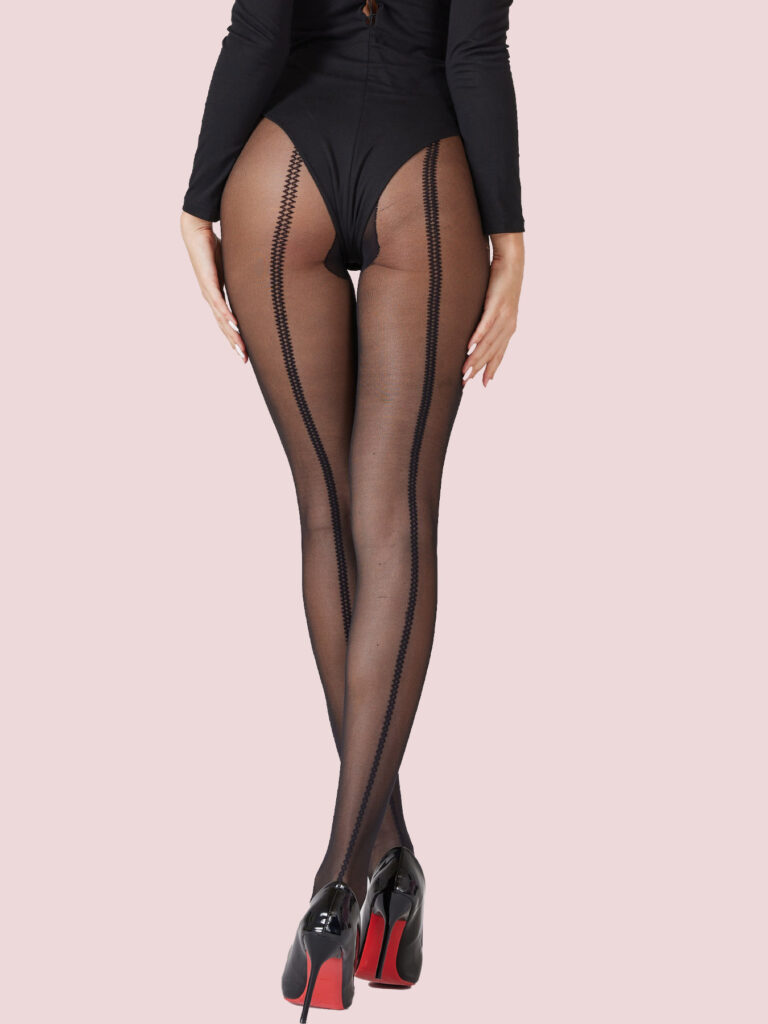
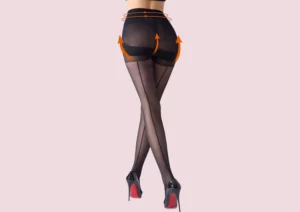
ה back-seam control-top pantyhose style illustrates another point: decorative construction and shaping construction can appear together, but the buyer should not let a back seam or fashion detail hide the fit test. The waist must still recover, the rise must stay in place, and the support should not create a hard transition.
OEM and ODM Control Tights Sampling: What Brands Should Confirm
Once the movement point is known, למַעֲרֶכֶת can be brought into the correction with measurements, tester notes, size, and lot information. “Make the waistband stronger” is too broad. A useful request identifies whether the change concerns width, edge, rise, panel density, crotch gusset depth, yarn recovery, or size grading.
Request a free sample pack after a correction is proposed, then repeat the original wear sequence. Keep the approved sample, measurement sheet, shade, denier, waistband height, rise, panel layout, and pack proof together. That record protects the next order from quietly returning to the old construction.
שאלות נפוצות
Q1: Why do control-top tights roll down even when the waistband feels tight?
A1: A short rise, insufficient upper-hip room, low crotch gusset position, weak recovery, or an unbalanced control panel can pull the garment downward. More pressure at the edge is not always the right fix.
Q2: What should brands measure during a roll-down investigation?
A2: Measure relaxed and stretched waistband width, front and back rise, crotch gusset depth, hip room, leg length, and recovery after release. Record the size and exact point where movement begins.
Q3: When should another control-top sample be requested?
A3: Request one after any change to the waistband, rise, brief panel, yarn, denier, size grade, finishing route, or package claim. Re-run the same sit-walk-stand test before bulk approval. Contact us today to discuss your project requirements.